Wednesday, September 17, 2008


Thursday, September 11, 2008
Phelps donates $1 million bonus - TODAY: People - MSNBC.com
Phelps to use $1 million bonus to start charity
The swimmer who made splash in Beijing is big advocate of pool safety
The swimmer who made splash in Beijing is big advocate of pool safety
 | Video |
 |
Michael Phelps gives back Sept. 2: Olympic swimmer Michael Phelps announces he’ll use the million-dollar bonus he earned from Speedo to start a foundation to help get kids get involved in swimming. Today show |
Saturday, September 06, 2008

Two Wolves - Inspirational Words of Wisdom

A Motivational Story with Wisdom -
Two Wolves
Cherokee Wisdom .
One evening an old Cherokee told his grandson about a battle that goes on inside people.
He said, "My son, the battle is between two wolves inside us all.
One is Evil. It is anger, envy, jealousy, sorrow, regret, greed, arrogance, self-pity, guilt, resentment, inferiority, lies, false pride, superiority, and ego.
The other is Good. It is joy, peace, love, hope, serenity, humility, kindness, benevolence, empathy, generosity, truth, compassion and faith."
The grandson thought about it for a minute and then asked his grandfather: "Which wolf wins?"
The old Cherokee simply replied, "The one you feed."
Friday, August 29, 2008
3 Easy Ways to Simplify Your Financial Life (SmartMoney Magazine Cover Story) at SmartMoney.com

I like this concept since I can use some help on simplifying everything.
In addition to the tips in the article for me I do the following:
1. Simply only use 2 credit cards.
2. Simply put everything on auto pay and paperless statements.
3. Simply use Mint.com to track my finances nearly daily.
As reported by www.smartmoney.com,
AMERICANS ARE RACKING up some major financial achievements — but not the kind you'd celebrate with a ticker tape parade.
Each of us now spends about 22 hours a year sorting out bills, account statements and other paperwork — more time than we spend helping our kids with homework or going to the movies, according to the Bureau of Labor Statistics. And last year we paid a record $16.3 billion in credit card late fees — small wonder, since the average household is now juggling 14 credit cards. Come to think of it, if we shredded all those bills and statements, we could have a ticker tape parade after all.
All this clutter is a by-product of a changing economy in which individuals are increasingly responsible for almost every aspect of their financial future. And while technology has made it easier to hunt down bargains, the downside is the tendency to jump on every great deal — and end up with a walletful of cards and a mailbox jammed with bills.
Taming the paperwork jungle has economic benefits as well as emotional ones: Andrew Caplin, an economics professor at New York University, found that people who plan and budget are, on average, 39 percent wealthier than their disorganized peers. With that in mind, we went hunting for tips that can help trim the time it takes to manage your finances. While these tips don't always represent the cheapest options, they can pay off in peace of mind — and long-term savings.
1. Simplify your savings and investments
2. Simplify your credit cards
3. Simplify your insurance
Continue to article
Monday, August 25, 2008
Poezii Romanesti
Nichita Stãnescu
A Poem
Tell me, if I caught you one day
and kissed the sole of your foot,
wouldn't you limp a little then,
afraid to crush my kiss?...
A Poem
Tell me, if I caught you one day
and kissed the sole of your foot,
wouldn't you limp a little then,
afraid to crush my kiss?...
Sunday, August 24, 2008
Says-It.com

Saturday, August 23, 2008
Peace Out..

Photograph by: Jason Todd/Getty Images
This is a perfect example of turning a negative into a positive. Very few stay at one employer for 40 plus years and if the chopping block comes your way take it in stride. Right? Well with these tips you just might.
The Right Way to Be Fired
by Laurence J. Stybel and Maryanne Peabody
Congratulations! You're fired! Here's how to turn an apparent disaster into a stepping-stone to success.
Even if you’re a top-notch executive in the best of times, you can still lose your job. But can you lose it the right way?
For some executives, getting fired is cause for lashing out, sinking into depression, or silently retreating. But these responses make it difficult to generate new opportunities—and can destroy careers.
How can you avoid these termination traps and make the best of being fired? First, get rid of the “tenure mind-set”—that falsely comforting sense that your organization will take care of you until you formally retire. Instead, adopt the “assignment mind-set”—seeing each job as a stepping-stone, a temporary project in your long-term career.
Then, take steps to control how you’re fired—and how you respond. The payoff? You position yourself for excellent new opportunities and you make a great catch for your next employer. You’re in control.
The Idea in Practice
| Trap | Who’s Most Susceptible | What Happens |
| Lost Identity | Founders, senior execs, longtime company leaders who’ve accumulated power and have "become" their jobs. | They fight back—lashing out against former employers and branding themselves as people no one wants to work with. |
| Lost Family | Leaders in companies with high emotional intensity where people consider colleagues family. | They mourn—sinking into bitterness and depression, becoming unattractive candidates for future positions. |
| Lost Ego | Introverts with top positions in areas requiring little outside interaction (e.g., accounting, engineering). | They fade away—neglecting to negotiate decent severance and refusing to network to generate new opportunities. |
Assume You’ll Be Fired—and Lay the Right Groundwork How to manage the possibility of being fired? Accept the impermanence of your job, and take these systematic approaches to your next move:
• Insert a termination clause in your employment contract—Counterintuitive, yes, but it’s your best hedge against a bitter exit. You’re never as attractive as the day you sign your contract.
• Schedule network phone calls—Make networking a disciplined, regular part of doing business. Keep your web of professional contacts intact.
• Raise your visibility—Conduct your own public-relations campaign, keeping a strong industry profile. Serve on for-profit boards in and outside your industry. Volunteer for trade associations’ externally oriented committees.
• Watch for exit signs—Getting fired should not come as a surprise. If your firm hustles people out the door, raise your own guard. If the company itself has an exit plan, find out how it affects your position. Consult with trusted, seasoned advisers who can alert you to potential changes.
• Volunteer to be terminated—if the firm’s exit strategy includes you. This makes you the actor, rather than the one acted upon.
Friday, August 22, 2008
Wordle
Tuesday, August 19, 2008
Can you do that?
This is the perfect example of doing something amazing because you had not yet learned, you can't do that.


Sunday, August 17, 2008
Advice From CEO's Dads Father Knows Best


Photograph by: William Vanderson
This is a great article the was published on Portfolio.com
It goes to show even the most successful people have their families to thank for so much. Being grateful and attempting to soak up as much as possible is essential to true success. Thanks Dad!
Bill Bradley
Basketball Hall of Famer, Olympic gold medalist, former New Jersey senator
Warren William Bradley made it through the Great Depression as a banker without foreclosing on a single home. "He was my No. 1 example in life," says Bill Bradley, who at 6-foot-5 towered over his father. "He was always thinking of other people, what he could do to make their lives better.
"The best advice my father has given me is to put your money in the bank because it works for you while you sleep," Bradley says. "That's why they call me Dollar Bill."
 Frank Bisignano
Chief administrative officer,
J.P. Morgan Chase "Advice from my father: Children are God's gift to the world. And the harder you work the luckier you get."
Galt Niederhoffer
Partner, Plum Pictures
When your dad is a highly influential investment banker (Victor Niederhoffer founded what is now Niederhoffer Henkel), you better be smart with your money. "Best advice my dad ever gave me is that, in a successful negotiation, all parties leave happy," says Galt Niederhoffer, whose independent film company, currently developing The Rise of Theodore Roosevelt starring Leonard DiCaprio and The Bell Jar with Julia Stiles, promises investors a 30 percent return.
Chairman and C.E.O. of Andell Holdings, producer of upcoming film State of Play
"As a pediatrician, my dad spent every day of his career working extremely hard to help children," Hauptman says. "I am in awe that his career was so clearly a gift, not only to the children he cared for but also to him—as his work greatly enriched his life. He taught me that it takes a lot of effort and hard work to succeed at anything, and he led by example, teaching us the merits of hard work whatever the endeavor."
George Lois
Former ad executive and art director for Esquire
Harry Lois, a Greek immigrant, worked from 4 in the morning to 10 at night in his Bronx flower shop. "My father taught me to work hard," says his son, who created a decade of covers for Esquire in the 1960s, iconic campaigns such as "I Want My MTV," and a music video for Bob Dylan. "To this day I don't know how to sit down for an hour without working."
Kevin Fennessey
C.E.O. of Absolut
"As a Depression survivor and a P.O.W. during World War II, my father learned how to treasure every day," Fennessey says. "He gave me this advice—pay attention to the details, but enjoy each day. I appreciate that fully and take that to heart every morning."
Mike Volpi
C.E.O. of Joost
Volpi's father was fond of sayings. "One of my favorites is a Chinese saying that goes, 'In pure water, no fish,'" Volpi recalls. "In life, you have to be prepared to take a little risk, go where things aren't so clean and clear—there you will find opportunity." How's he taking that advice? "Well, I work at Joost."
David Adler
C.E.O. of Bizbash
Adler's father, Warren, has penned more than 28 novels and short-story collections, including The War of the Roses. Now 81, he's coming out with two more books this year. "My dad has the energy of a 23-year-old," Adler says. "He's out every night. New York is his permanent summer camp." Which makes the younger Adler look forward to his own later years. "Age is just a state of mind," he says. "My father taught me to be in charge of your own destiny."
Saturday, August 16, 2008
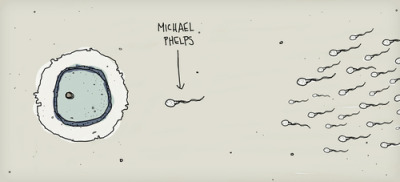
Golden Boy Phelps wins 8th Gold Medal
Phelps wins Olympic-record eighth gold medal - 2008 Olympics - SI.com

He said he could and he did. He planned for challenges but expected and demanded the best. A true American Hero. Someone who's unbelievable hard work and determination has proven himself real gold.
The details as reported by SI.com are as follows:
He said he could and he did. He planned for challenges but expected and demanded the best. A true American Hero. Someone who's unbelievable hard work and determination has proven himself real gold.
The details as reported by SI.com are as follows:
The Americans swept the men's relays in Beijing, with Phelps leading off in the 400 and 800 freestyle relays. Lezak anchored the 400 free to a narrow victory over France to preserve Phelps' historic bid.
Australia took the silver in 3:30.04, and Japan earned the bronze in 3:31.18.


Friday, August 15, 2008
9 Things You Can Do to Be Happy in the Next 30 Minutes | How To Be Happy | Life Soul : RealSimple.com
I thought we could all use this Real Simple article. Be happy in 30? Well we will see about that.
Okay so I tried 2, and 8 and I must say it did make me feel happier. I won't over analyze it but it just made me feel happier. You could try too, and let me know if you do.
1. Raise your activity level
2. Take a walk outside.
3. Reach out. Send an e-mail to a friend you haven’t seen in a while, or reach out to someone new.
4. Rid yourself of a nagging task.
5. Create a more serene environment.
6. Do a good deed.
7. Save someone’s life. Sign up to be an organ donor, and remember to tell your family about your decision. “
8. Act happy.
9. Learn something new.
The entire article.
Okay so I tried 2, and 8 and I must say it did make me feel happier. I won't over analyze it but it just made me feel happier. You could try too, and let me know if you do.
1. Raise your activity level
2. Take a walk outside.
3. Reach out. Send an e-mail to a friend you haven’t seen in a while, or reach out to someone new.
4. Rid yourself of a nagging task.
5. Create a more serene environment.
6. Do a good deed.
7. Save someone’s life. Sign up to be an organ donor, and remember to tell your family about your decision. “
8. Act happy.
9. Learn something new.
The entire article.
Psychology Today: Relationship Rules
This is a very interesting article on working on your marriage/relationship. Sometimes I find we spend a great deal of time trying to figure out how to get into a new relationship, rather than working on the ones we already have. This list some very proactive ways to not only survive your relationships but to thrive in them as well.
* Choose a partner wisely and well.
* Know your partner's beliefs about relationships.
* Don't confuse sex with love.
* Know your needs and speak up for them clearly.
* Respect, respect, respect. Inside and outside the relationship, act in ways so that your partner always maintains respect for you. Mutual respect is essential to a good relationship.
* View yourselves as a team, which means you are two unique individuals bringing different perspectives and strengths. That is the value of a team--your differences.
* Listen, truly listen, to your partner's concerns and complaints without judgment.
* Work hard at maintaining closeness.
* Take a long-range view.
* Never underestimate the power of good grooming. ( my fav)
* Sex is good. Pillow talk is better. Sex is easy, intimacy is difficult.
The article in its entirety.
* Choose a partner wisely and well.
* Know your partner's beliefs about relationships.
* Don't confuse sex with love.
* Know your needs and speak up for them clearly.
* Respect, respect, respect. Inside and outside the relationship, act in ways so that your partner always maintains respect for you. Mutual respect is essential to a good relationship.
* View yourselves as a team, which means you are two unique individuals bringing different perspectives and strengths. That is the value of a team--your differences.
* Listen, truly listen, to your partner's concerns and complaints without judgment.
* Work hard at maintaining closeness.
* Take a long-range view.
* Never underestimate the power of good grooming. ( my fav)
* Sex is good. Pillow talk is better. Sex is easy, intimacy is difficult.
The article in its entirety.
Thursday, August 14, 2008
The Power of Positive Thoughts Helps Phelps Win Olympic Gold
Phelps is the quintessential example of focused positive thoughts and their impact. He had said his goal was to win 8 gold medals in the 2008 Olympics. When an Australian swimmer said he didn't think Phelps could win 8 gold medals in a newspaper article. Phelps took that article and used it to his advantage. He cut it out and placed it in his locker and each day it would serve as his reminder of what he would accomplish. While history has not yet been written on the actual number of medals it is safe to say he has come farther than most initially expected.
More than proving them wrong he proved himself right.
According to sports Psychologist Dahlkoetter, As mentioned in this AP article. Aside from such obvious traits as positive imaging, desire, and enthusiasm, Dahlkoetter said an athlete should possess “the ability to handle adversity. When you lose, you can find out things about yourself and turn it into a gain. Top athletes embrace the stressful moments rather than shrink from them.”
Boy that is the attitude I need! Phelps certianly turned a negative into a positive.
More than proving them wrong he proved himself right.
According to sports Psychologist Dahlkoetter, As mentioned in this AP article. Aside from such obvious traits as positive imaging, desire, and enthusiasm, Dahlkoetter said an athlete should possess “the ability to handle adversity. When you lose, you can find out things about yourself and turn it into a gain. Top athletes embrace the stressful moments rather than shrink from them.”
Boy that is the attitude I need! Phelps certianly turned a negative into a positive.
Tuesday, August 12, 2008
Stress Remedies

Stress Remedies

 In case you feel any stress... these are good remedies.
 Stress Management
A lecturer, when explaining stress management to an audience, raised a glass of water and asked,
how heavy is this glass of water?
Answers called out ranged from 20g to 500g.
The lecturer replied:
The absolute weight doesn't matter. It depends on how long you try to hold it. If I hold it for a minute, that's not a problem. If I hold it for an hour, I'll have an ache in my right arm. If I hold it for a day, you'll have to call an ambulance. In each case, it's the same weight, but the longer I hold it, the heavier it becomes.
He continued:
And that's the way it is with stress management. If we carry our burdens all the time, sooner or later, as the burden becomes increasingly heavy, we won't be able to carry on. As with the glass of water, you have to put it down for a while and rest before holding it again. When we're refreshed, we can carry on with the burden."
So, before you return home tonight, put the burden of work down. Don't carry it home. You can pick it up tomorrow. Whatever burdens you're carrying now, let them down for a moment if you can.
Relax; pick them up later after you've rested. Life is short. Enjoy it!
How to Deal with the Burdens of Life
Accept that some days you're the pigeon, and some days you're the statue.
Always keep your words soft and sweet, just in case you have to eat them.
Always read stuff that will make you look good if you die in the middle of it.
Drive carefully. It's not only cars that can be recalled by their maker.
If you can't be kind, at least have the decency to be vague.
If you lend someone $20 and never see that person again, it was probably worth it.
It may be that your sole purpose in life is simply to serve as a warning to others.
Never buy a car you can't push.
Never put both feet in your mouth at the same time, because then you won't have a leg to stand on.
Nobody cares if you can't dance well. Just get up and dance.
Since the early worm that gets eaten by the bird, sleep late.
The second mouse gets the cheese.
When everything's coming your way, you're in the wrong lane.
Birthdays are good for you. The more you have, the longer you live.
You are Unique
You may be only one person in the world, but you may also be the world to one person.
Some mistakes are too much fun to only make once.
We could learn a lot from crayons. Some are sharp, some are pretty and some are dull. Some have weird names, and all are different colors, but they all have to live in the same box.
A truly happy person is one who can enjoy the scenery on a detour.
Have an awesome day and know that someone has thought about you.
On 2005/04/09 Google finds 171 references to this Reminder.
Monday, August 11, 2008
Is Your Jar Full?

Is Your Jar Full?
When things in your life seem almost to much to handle, when 24 hours in a
day are not enough, remember the mayonnaise jar......and the beer.
A Professor stood before his philosophy class and had some items in front
of him. When the class began, wordlessly, he picked up a very large and
empty mayonnaise jar and proceeded to fill it with golf balls. He then
asked the students if the jar was full. They agreed that it was.
So the Professor then picked up a box of pebbles and poured them into the
jar. He shook the jar lightly. The pebbles rolled into the open areas
between the golf balls. He then asked the students again if the jar was
full. They agreed it was.
The Professor next picked up a box of sand and poured it into the jar. Of
course, the sand filled up everything else. He asked once more if the jar
was full. The students responded with an unanimous "Yes."
The Professor then produced two cans of beer from under the table and
poured the entire contents into the jar, effectively filling the empty
space between the sand. The students laughed.
"Now," said the Professor, as the laughter subsided, "I want you to
recognize that this jar represents your life.
The golf balls are the important things - your family, your children, your
health, your friends, your favorite passions - things that if everything
else was lost and only they remained, your life would still be full.
The pebbles are the other things that matter like your job, your house,
your car. The sand is everything else - the small stuff."
"If you put the sand into the jar first", he continued, "there is no room
for the pebbles or the golf balls. The same goes for life. If you spend all
your time and energy on the small stuff, you will never have room for the
things that are important to you. Pay attention to the things that are
critical to your happiness. Play with your children. Take time to get
medical checkups. Take your partner out to dinner. Play another 18. There
will always be time to clean the house, and fix the disposal. Take care of
the golf balls first, the things that really matter. Set your priorities.
The rest is just sand."
When he had finished, there was a profound silence. Then one of the
students raised her hand and with a puzzled expression, inquired what the
beer represented.
The Professor smiled. "I'm glad you asked. It just goes to show you that no
matter how full your life may seem, there's always room for a couple of
beers."
Sunday, August 10, 2008
Timothy Ferriss on Doing The Impossible

I love Ferriss and I am actively working on the premise in his, "4 Hour work Week" book. It truly is a must have even if it is not your goal. His perspective is just fresh In his post he covers, “The key to finding means to accomplish the “impossible” is asking the right question: “How would you do ____ for a week if your life depended on it?” Most things considered impossible just haven’t been looked at through the “how” lens of lateral thinking.” [Tips: Innovation]
Sunday, August 03, 2008
How to Have Less Awkward Conversations: Assuming Rapport
Published by December 11th, 2007 in Personal Development and People Skills.
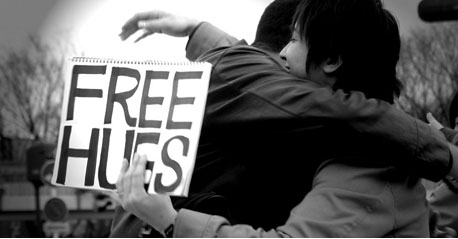
Image by kalandrakas.
Assuming rapport. This is definitely one of the best social skill tips I have ever learned about. Unfortunately I’ve forgotten a bit about it lately. Maybe you have too. Or missed it altogether. So I thought I’d bring it up again.
Now, what is assuming rapport?
Basically, instead of going into a conversation or meeting nervously and thinking “how will this go?” you take different approach. You assume that you and the person(s) will establish a good connection (rapport).
Friday, August 01, 2008
Funny metaphors used in high school essays
Love help: Funny metaphors used in high school essays - Help.com
Just in case you need some writing inspiration. Every year, English teachers from across the USA can submit their collections of actual analogies and metaphors found in high school essays. These excerpts are published each year to the amusement of teachers across the country. Here are last year’s winners:
1. Her face was a perfect oval, like a circle that had its two sides gently compressed by a Thigh Master.
2. His thoughts tumbled in his head, making and breaking alliances like underpants in a dryer without Cling Free.
3. He spoke with the wisdom that can only come from experience, like a guy who went blind because he looked at a solar eclipse without one of those boxes with a pinhole in it and now goes around the country speaking at high schools about the dangers of looking at a solar eclipse without one of those boxes with a pinhole in it.
4. She grew on him like she was a colony of E. coli, and he was room temperature Canadian beef.
5. She had a deep, throaty, genuine laugh, like that sound a dog makes just before it throws up.
6. Her vocabulary was as bad as, like, whatever.
7. He was as tall as a six-foot, three-inch tree.
8. The revelation that his marriage of 30 years had disintegrated because of his wife’s infidelity came as a rude shock, like a surcharge at a formerly surcharge-free ATM machine.
9. The little boat gently drifted across the pond exactly the way a bowling ball wouldn’t.
10. McBride fell 12 stories, hitting the pavement like a Hefty bag filled with vegetable soup.
11. From the attic came an unearthly howl. The whole scene had an eerie, surreal quality, like when you’re on vacation in another
city and Jeopardy comes on at 7:00 p.m. instead of 7:30
12. Her hair glistened in the rain like a nose hair after a sneeze.
13. The hailstones leaped from the pavement, just like maggots when you fry them in hot grease.
14. Long separated by cruel fate, the star-crossed lovers raced across the grassy field toward each other like two freight trains, one having left Cleveland at 6:36 p.m. traveling at 55 mph, the other from Topeka at 4:19 p.m. at a speed of 35 mph.
15. They lived in a typical suburban neighborhood with picket fences that resembled Nancy Kerrigan’s teeth.
16. John and Mary had never met. They were like two hummingbirds who had also never met.
17. He fell for her like his heart was a mob informant, and she was the East River.
18. Even in his last years, Granddad had a mind like a steel trap, only one that had been left out so long, it had rusted shut.
19. Shots rang out, as shots are wont to do.
20. The plan was simple, like my brother-in-law Phil. But unlike Phil, this plan just might work.
21. The young fighter had a hungry look, the kind you get from not eating for a while.
22. He was as lame as a duck. Not the metaphorical lame duck, either, but a real duck that was actually lame, maybe from stepping on a land mine or something.
23. The ballerina rose gracefully en Pointe and extended one slender leg behind her, like a dog at a fire hydrant.
24. It was an American tradition, like fathers chasing kids around with power tools.
25. He was deeply in love. When she spoke, he thought he heard bells, as if she were a garbage truck backing up.
Sunday, July 27, 2008

thisisby.us - How I Need a Hand in Mine to Feel, by petenicely
thisisby.us - How I Need a Hand in Mine to Feel, by petenicely
Very good.. a little long by web standards but still very good
Very good.. a little long by web standards but still very good
explorefaith.org -
explorefaith.org -
Sunday, July 27
I will not leave you comfortless. I will come to you.
—John 14:18
We all experience the truth of that phrase. And we all seem to know what it implies: that things will unfold that are outside our control, against our will, and that may leave us in a place of struggle, pain, and despair. We hope to avoid that painful chaos, because when we are experiencing pain, struggle, and despair, we feel so terribly alone.
Friends and family may offer comfort and help, but still we feel like the lone wolf howling its plaintiff cry in the isolated forest. Our cry becomes the ache of abandonment. We feel left to see our way through the tangled web and yet feel unable to do so.
In the core of that aloneness there lives a hidden presence—a holy presence— that promises that we do not stand alone to face the terror of our lives or the terror of our own selves. That Divine Presence will be known to us if we will descend into the lonely core that feels so overwhelming and sit in silence.
The Holy Companion will come as surely as the day dawns, and in the silence, the chaos will be stilled.
O Lord, when the vagaries of life buffet me on all sides and leave me helpless and alone, come oh come, and walk with me through the shadows that feel like death.
The Signposts for July are written by Renée Miller and originally appeared on explorefaith.org in 2004.
Thursday, July 24, 2008
Dr. Wayne Dyer - 22 Lessons I Learned
The following was published by Chris Knight he is the humble moderator of the fan discussion board for Dr. Wayne Dyer:
Dr. Wayne Dyer is a popular motivational speaker and author. His recent books include The Power of Intention, Ten Secrets For Success & Inner Peace, Getting in the Gap and Everyday Wisdom. I've been studying Dyer's principles for the past 22 years and here are the top 22 lessons I've learned from him:
- You get whatever you think about most. Whatever you think about expands… and therefore, we must be careful to not think about what we do not want.
- You can never get enough of what you don't want. Why? Because we're thinking about what we don't want and we keep getting more of it. From an abundance and prosperity perspective, it can be costly (meaning you can lose great opportunities) to contemplate the conditions you do not want to produce for your life…for fear of getting more of what you don't want.
- Think from the end. I'm a big believer in starting with the end outcome and working backwards to reach it. Dyer takes a more mental approach to it as he encourages you to contemplate yourself surrounded by the people, events, and things that represent your version of a "perfect life."
- An attitude of gratitude will take you a long way. Rumi said, "Trade your knowledge for bewilderment." It is good to be in awe of all that you have attracted into your life and the more you are grateful for that - the more that will flow freely into your life.
- Paraphrasing Dyer: There are no branches of any trees that think it is wise to fight with each other. In other words, there is no value in fighting with others as we are all from the same metaphorical human tree of life. There is an old zen saying that goes something like this: Whatever you are for, strengthens you and whatever you are against, weakens you.
- It is only natural to have abundance and prosperity in your life. It is unnatural to resist the gifts you have been given in life to share with others. Therefore act confidently with a "knowing" that you already have all of the resources you need to succeed.
- You must be independent of the opinion of others. No one can make you into what you are not. You are responsible to no one for your actions and thoughts except yourself. In addition, you are not in control of your reputation. All you can control is yourself and how you act on a day to day basis.
- You alone choose your emotional state each day. No one can make you feel any different than you choose to feel on any day. Therefore take full responsibility for the emotional states that you choose to embrace each day.
- You are not your body nor are you the possessions that you believe you have. You are timeless; perfect; …just the way you have forever been and will forever be. You are a spiritual being having a human experience. Live your truth.
- Meditation can help you solve problems and achieve inner peace. While mental visualization of your intentions or goals are a good thing to do, think of "meditation" as quieting your mind to achieve a place of "no where" -- It's one of the best ways to center yourself.
- Your EGO is often at odds with universal laws and principles. Best to identify when you are acting from ego vs. acting from your true authentic self. Your ego wants you to feel special and different than others but the reality is that we share more in common than we have differences. Focus on radical humility and respect for yourself and others in order to keep your ego at bay. You can only extend to another that which you are in truth.
- You can only give others what you have inside of yourself. Therefore to give love away to others, you must cultivate love for yourself FIRST. Dyer uses the metaphor of squeezing an orange - asking you what comes out when you squeeze it. Most people answer, "orange juice" comes out. Why? Because that is what is inside. When humans are squeezed, what comes out of them is what they harbor inside of themselves. Harbor love, acceptance, joy, confidence, peace and harmony towards yourself so that you can radiate it towards others.
- Your relationship with others does not really exist. You only have your perception of your relationship with others to act on. Therefore you must focus on making sure you perceive your relationship with others on the terms that you hope for the future of the relationship to exist. In other words, you must see harmony within yourself and then with the other person. You must always have within you what you wish to see or give another.
- Our intentions create our reality. We each create our own personal realities by what we focus on and intend to happen for our experiences. Therefore we have an enormous responsibility to choose our intentions carefully.
- Be attached to nothing but rather connected with what you want for your life. Attachment can cloud your ability to attract what you want. When you let go and surrender to your perfect self, you will attract what you desire.
- There is never any scarcity of opportunity, but rather there is only scarcity of resolve to seize the opportunities that knock on our door every day. Scarcity does not exist unless we choose to embrace it…therefore, it is better to never embrace scarcity only embrace the possibility for abundance.
- When the teacher is ready, the students will appear. When the student is ready, the teachers will appear. We can not learn the lessons we are here to learn if we are not open and receptive to learn. Do not resist the possibility to change, but rather expand and become more open.
- No one was ever hurt by practicing random acts of kindness. The law of reciprocity always rewards kindness and even more-so when you are kind without any expectation of needing a return. There is no difference in the words "giving" and "receiving."
- The best way to maximize book sales is to release related products that can be purchased. For example, a book could be followed up with an audio tape, audio CD, DVD, flip calendar, playing card decks and more. Each of these creates additional revenue streams that help to maximize the ROI from each published works. (My marketing brain wanted to insert this lesson in here ;-)
- Judgment: One of our purposes in life is to find a way to free ourselves of our need to judge others in a negative light. This is the work of our ego and judging others prevents us from seeing the good in them. There is no value in judging others poorly. As we see others, we also see ourselves.
- Dyer says, "It's Never Crowded Along the Extra Mile." That means that we must always give more than we expect to receive. In doing so, we join the small percentage of achievers that consistently go above and beyond the call of duty to serve others. The rewards are often disproportionate for those who go the extra mile vs. those who only do the minimum they need to get by. We give without expectations.
- Trust in yourself and in doing so, you trust in the very wisdom that created you. It is impossible to become a no-limit person if you focus on limitations…therefore only focus on what you want to attract for your life. You already are complete, whole and perfect. Trust in the perfection of your life.
20 Questions You Should Ask Yourself Every Sunday | Marc and Angel Hack Life

At the cusp of new beginnings many of us take time to reflect on our lives by looking back over the past and ahead into the future. We ponder the successes, failures and standout events that are slowly scripting our life’s story. This process of self reflection helps maintain a conscious awareness of where we’ve been and where we intend to go. It is pertinent to the organization and preservation of our dreams, goals and desires.
If you would like to maximize the benefits of self reflection, I have 20 questions for you. These questions should be reviewed every Sunday morning or sometime during the weekend when you have some quiet time to think. Remember, reflection is the key to progression.
- What did I learn last week? – If you have trouble answering this question, it’s time for a change. It doesn’t matter how old you are, you should learn something new every week.
- What was my greatest accomplishment over the past week? – Reflecting on your accomplishments is a healthy way to raise self confidence and contentment. It’s also an effective way to track your progress.
- Which moment from last week was the most memorable and why? – It may open up your mind to new passions and goals, or simple pastimes worth revisiting.
- What’s the #1 thing I need to accomplish this week? – Everything else is secondary, and should be treated as such. Nevertheless, this question will also shine light on other noteworthy tasks.
- What can I do right now to make the week less stressful? – Set reminders in your calendar, get your laundry done, fill the car with gas… organize yourself.
- What have I struggled with in the past that might also affect the upcoming week? – The idea here is to learn from your struggles and better equip yourself for future encounters.
- What was last week’s biggest time sink? – Steer clear of this in the future. Setup physical barriers against distractions if you have to.
- Am I carrying any excess baggage into the week that can be dropped? – Physical clutter, mental clutter… eliminate the unnecessary so the necessary may shine bright.
- What have I been avoiding that needs to get done? – Pencil in a time to get these things done. For any 2-minute or less tasks, consider scheduling them first thing Monday morning.
- What opportunities are still on the table? – If it’s still available and you want it, make a concrete plan to go after it this week.
- Is there anyone I’ve been meaning to talk to? – Regular communication can solve problems before they fester. Always keep an open line of communication to those around you.
- Is there anyone that deserves a big ‘Thank You’? – Take time each week to thank the people who have helped you. Your kind gesture will not go unnoticed.
- How can I help someone else this coming week? – The easiest way to get what you want is to help others get what they want. If you help them, they will remember you when you need help.
- What are my top 3 goals for the next 3 years? – You’ll never make any progress in life if you don’t setup realistic goals for yourself.
- Have any of my recent actions moved me closer to my goals? – If the answer is no, something needs to change.
- What’s the next step for each goal? – Knowing the next step is the key to accomplishing the whole.
- What am I looking forward to during the upcoming week? – The answer can act as a great source of motivation. If nothing exists, schedule something to look forward to.
- What are my fears? – Consciously address your fears each week and slowly work on resolving them. It’s all about taking baby steps.
- What am I most grateful for? – It’s a smart way to keep things in perspective, and something you should never lose sight of.
- If I knew I only had one week to live, who would I spend my time with? – Another helpful reminder… Life is short. Spend more time with the people you care about.
Take 30 minutes every Sunday and give yourself the gift of self reflection. It has worked wonders for me, and I am confident it will do the same for you.
Wednesday, July 23, 2008

Tuesday, July 22, 2008
Lookin’ like a million dollars, even on a broke-ass budget
Broke-Ass Student » Blog Archive » Beauty On A Budget - Some Of My Favorite Beauty Secrets.co
Great tips from see below:
Great tips from see below:
Lookin’ like a million dollars, even on a broke-ass budget

For me, beauty has always been a special type of spiritual elevation - a powerful radiation from the inside out that shines through in the joy we feel in our hearts and by unlocking the passion in our souls. Beauty encapsulates not only the physical, but possesses the mental and spiritual just as deeply.
Many women may feel afraid to cultivate their external beauty and end up neglecting themselves in fear of being too vain or self indulgent. This to me is an absolute shame. Feeling fabulous both inside and out is extreme nourishment for the soul and every person should penetrate their fullest potential on every level. No matter what age, anyone can be truly beautiful.
Beauty is all around us. Appreciating and cultivating your unique beauty is your own Divine right. Cont..


Apple iPhone 3G An eBay Cash Cow? - The Channel Wire - IT Channel News And Views by CRN and VARBusiness
Apple iPhone 3G An eBay Cash Cow? - The Channel Wire - IT Channel News And Views by CRN and VARBusiness
There's a price to pay for impatience, or for being late to the Apple iPhone 3G party. There's also a price to pay for thumbing your nose at authority.
There's a price to pay for impatience, or for being late to the Apple iPhone 3G party. There's also a price to pay for thumbing your nose at authority.
If you didn't feel like waiting in line or couldn't find the time to make it to the Apple Store " where bored Apple iPhone 3G hopefuls still congregated in some locations Monday " you can take to eBay to get your 3G fix. Same goes for the folks who want to stick it to AT&T and not re-up or sign up for a new contract with the carrier in order to get the coveted smart phone.
But with convenience comes cost. A search of the online auction house returned several hundred Apple iPhone 3Gs, both in the 8 GB and 16 GB variety. Many of those auction listings promise "no contract" or a device that's "unlockable," meaning it can be manipulated to work with a network other than AT&T's. Shrewd online sellers are drawing in bidders with the promise of free worldwide or free overnight shipping.
RussiaToday : SciTech : Hydrogen bacteria to fill gas tanks?
SciTech  July 21, 2008, 11:03
July 21, 2008, 11:03 Hydrogen bacteria to fill gas tanks?
A Russian-born scientist living in the U.S. state of Tennessee believes he may have found a solution to rising petrol costs – a cheap way to produce hydrogen.Biology Professor Sergey Markov from Austin Peay State University has discovered a way to produce hydrogen fuel for vehicles by using photosynthetic bacteria.
“This is very attractive for industrial application because photosynthetic bacteria can produce hydrogen using solar light and water and we have plenty of solar light and water around,” he said.
The specific purple bacteria Dr. Markov is referring to, grows in mud, ponds and lakes. The prototype bioreactor he built mixes the bacteria with carbon monoxide and water - and makes hydrogen.
Hydrogen is an attractive alternative fuel for the future. It’s is reusable, efficient and eco-friendly since when it burns it produces ordinary water and no greenhouse gases. However it’s explosive and requires special engines – problems yet to be solved.
Dr. Markov is now building a pilot scale bio-reactor – the prototype he has now is just too small for mass hydrogen production.
He's received a grant from the U.S. Department of Energy - but says more finance and support is needed.
Saturday, July 12, 2008


Ten Rules for Being Human by Cherie Carter-Scott
Ten Rules for Being Human by Cherie Carter-Scott: "Ten Rules for Being Human
by Cherie Carter-Scott
1. You will receive a body. You may like it or hate it, but it's yours to keep for the entire period.
2. You will learn lessons. You are enrolled in a full-time informal school called, 'life.'
3. There are no mistakes, only lessons. Growth is a process of trial, error, and experimentation. The 'failed' experiments are as much a part of the process as the experiments that ultimately 'work.'
4. Lessons are repeated until they are learned. A lesson will be presented to you in various forms until you have learned it. When you have learned it, you can go on to the next lesson.
5. Learning lessons does not end. There's no part of life that doesn't contain its lessons. If you're alive, that means there are still lessons to be learned.
6. 'There' is no better a place than 'here.' When your 'there' has become a 'here', you will simply obtain another 'there' that will again look better than 'here.'
7. Other people are merely mirrors of you. You cannot love or hate something about another person unless it reflects to you something you love or hate about yourself.
8. What you make of your life is up to you. You have all the tools and resources you need. What you do with them is up to you. The choice is yours.
9. Your a"
by Cherie Carter-Scott
1. You will receive a body. You may like it or hate it, but it's yours to keep for the entire period.
2. You will learn lessons. You are enrolled in a full-time informal school called, 'life.'
3. There are no mistakes, only lessons. Growth is a process of trial, error, and experimentation. The 'failed' experiments are as much a part of the process as the experiments that ultimately 'work.'
4. Lessons are repeated until they are learned. A lesson will be presented to you in various forms until you have learned it. When you have learned it, you can go on to the next lesson.
5. Learning lessons does not end. There's no part of life that doesn't contain its lessons. If you're alive, that means there are still lessons to be learned.
6. 'There' is no better a place than 'here.' When your 'there' has become a 'here', you will simply obtain another 'there' that will again look better than 'here.'
7. Other people are merely mirrors of you. You cannot love or hate something about another person unless it reflects to you something you love or hate about yourself.
8. What you make of your life is up to you. You have all the tools and resources you need. What you do with them is up to you. The choice is yours.
9. Your a"

Monday, June 30, 2008
Detrave Hangout
Detrave Hangout
I love this site you can move these little tiles to make sentences at the same time as others on the site.
Very different and very cool!
I love this site you can move these little tiles to make sentences at the same time as others on the site.
Very different and very cool!
Paying in CASH
 We'll focus on just one technique to improve your finances - paying in cash. Here's how making cash-only purchases can help you to budget, save and invest.
A Plastic Paradise
With rapid increases in the use of plastic over hard currency, some people consider carrying cash old fashioned. To be fair, plastic is much sexier than a bit of colored paper with a deceased president gazing into the great beyond. Some banks even allow you to customize the color and graphics on your credit and debit cards.
Debit and credit cards also offer the advantage of security. With them, you need a signature and/or a PIN number to access your funds. Cash is only protected by your ability to defend it should someone want to take it from you.
Except for the odd country store, plastic is accepted in as many places as cash is. Yet cash is almost always the better choice for making a purchase. Here's why:
Overpaying
One of the drawbacks of credit and debit cards is that they encourage you to spend more than you intend to by giving you easy access to more capital. With cash, spending more than you intend requires going to a bank or ATM, then returning to the store to complete your purchase. This provides time to reconsider whether your budget can handle the extra strain.
Carrying only the cash you are prepared to spend on a given product can prevent you from 'buying up' and paying for features you don't need. This works for minor items, but buying a boat or pickup truck requires more cash than you may be comfortable carrying on you. If a check can't be used, a debit card is better than a credit card because you can only spend money you already have.
Over-Shopping
Cards won't just lead you to pay too much for single purchases, they also encourage you to buy more items than you mean to. Stores build displays to make their wares appealing so that you will purchase more. In some cases a checklist is insufficient in preventing impulse buys.
People tend to spend more with credit cards than with cash. One study found that people spend up to 18% more when using credit cards, and McDonald's notes that average purchases rose from $4.50 to $7 when customers used plastic over cash.
Only carrying enough cash to buy the things on your list is the best way to shop within your budget. If you take the time, you can find sales or inexpensive alternatives to your regular brands to make your cash go further.
Cash Vs. Credit
For the purpose of this article, cash means money you have already earned. Using your Visa for a cash advance does not solve the problem of using high-interest debt to cover your expenses.
Cash has one clear advantage over credit cards: if you carry a balance on your card, or only make the minimum monthly payment, you will incur interest at a rate of 15% or more on your purchase. This means paying $15 or more for every $100 you spend. If you save enough cash for the same purchase, you give yourself the equivalent of a 15% discount by not using your card.
Cash Vs. Debit
If we just portrayed cash as a better alternative to credit cards, few would argue against us. In contrast, debit cards enjoy a protected status, despite ATM fees.
A debit card can also trivialize purchases. Being a square of plastic, it is difficult to tell how much money is spent through your debit card. It becomes a matter of $2 here, $6 there and so on until you give up tracking how much you spend. It's a shock when the monthly statement comes. With cash, you can monitor your funds as you spend.
So, in conclusion, using a credit or debit card offers more security than cash in most cases. For large purchases, cash is often not an option and writing a check or getting a bank draft may be more trouble than it is worth. In addition, a properly used debit card can be a great alternative to cash instead of resulting in credit card issues.
A credit card can also be a convenient tool, but it's only a fair substitute for cash when your balance is paid in full at the end of each month. Otherwise, your reward for convenience is debt.
If you tend to overspend, shopping with cash is one way to adhere to your budget and limit impulse buying.
So they don't all hate you.

Your true potential is enhanced by the sum of all the people who like you, and thus would go out of their way to assist you in a time of need. Unfortunately, there is no quick-fix guide
Here’s what you should practice:
Beginning today, treat everyone you meet as if they were going to be dead by midnight. Extend them all the care, kindness and understanding you can muster. Your life will never be the same again.
- Og Mandino
- Be Attentive to Others and Never Stop Listening – Self-centered people are usually unlikable. When you’re involved in a conversation, it’s important to focus more on the other person and less on yourself. If you genuinely concern yourself with others and listen
- Complement People Who Deserve It – Go out of your way to personally acknowledge and complement the people who have gone out of their way to shine. Everybody likes to hear that their efforts are appreciated.
- Make Yourself Available and Approachable – If people cannot get a hold of you, or have trouble approaching you, they will forget about you. Your general availability and accessibility to others is extremely important to them. Always maintain a positive, tolerant attitude and keep an open line of communication to those around you.
Be Ready
 |  |
| | |||||||||||||||||||||||||||||||||||||||||||||||
|
| |
| | ||||||||||||||||||||||||||||||||||||||||||||||


Subscribe to:
Comments (Atom)


 Posts
Posts